
Промт для GPT Image 2: создаём character design board персонажа уровня анимационной студии

Иногда генерация персонажа в ИИ выглядит как просто красивая картинка: один ракурс, одна эмоция, один костюм — и всё. Но для сценария, комикса, игры или анимации этого мало.
Настоящий продакшен-подход — это когда персонаж собран как полноценный дизайн-документ: с разными ракурсами, мимикой, одеждой, материалами, психологией и подсказками для художников, аниматоров или режиссёра.
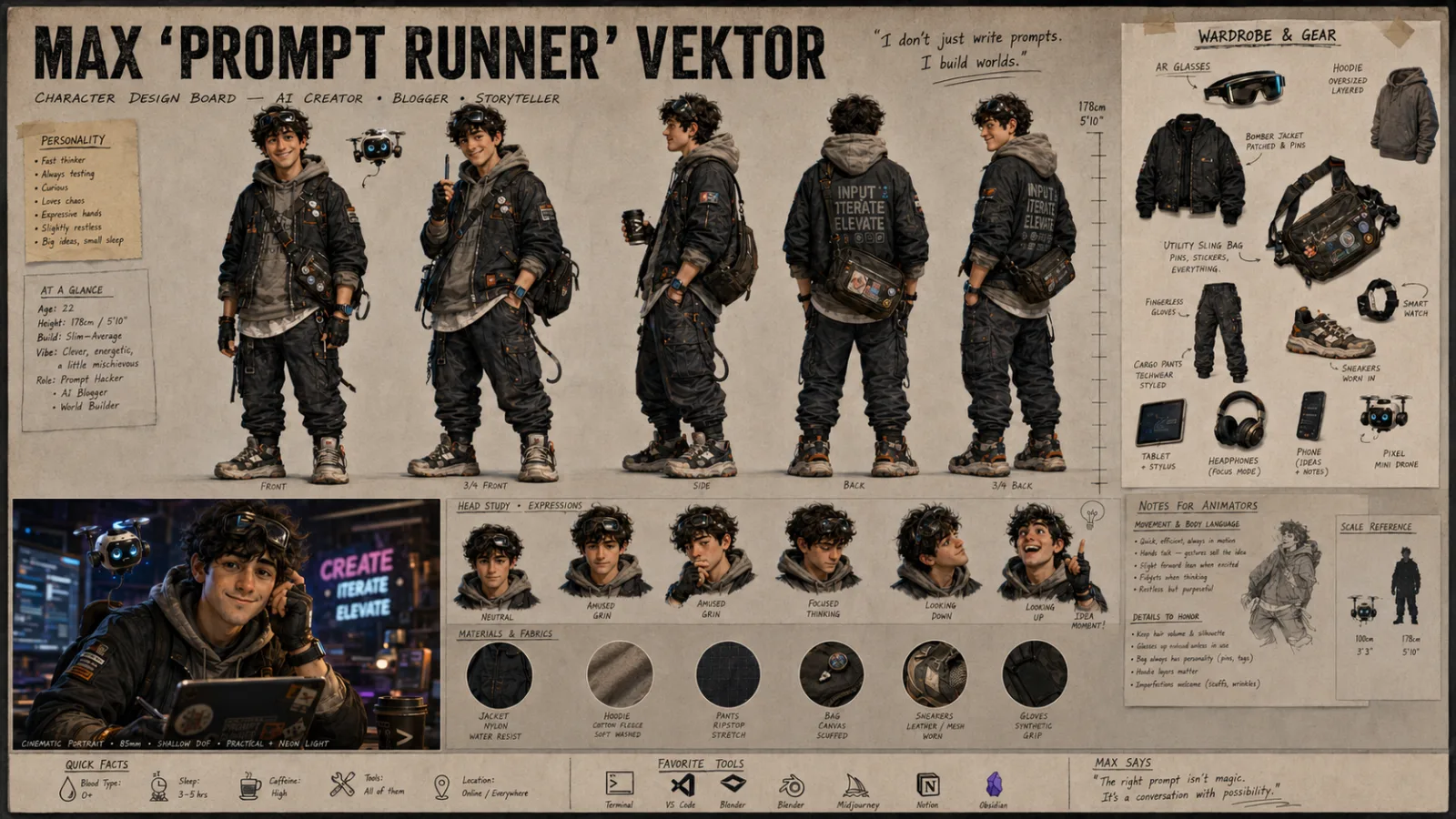
Я протестировал формат промта, который превращает обычное описание героя в полноценный character design sheet — визуальный борд персонажа, похожий на материалы для анимационной студии или pitch deck.
Что получится на выходе
После генерации ты получаешь не просто портрет персонажа, а целый дизайн-борд:
— персонаж в нескольких ракурсах: спереди, 3/4, сбоку, сзади;
— отдельный блок с эмоциями и выражениями лица;
— кинематографичный портрет с глубиной резкости;
— разбор одежды, тканей, аксессуаров и деталей;
— заметки по характеру и поведению;
— пропорции тела и шкала роста;
— аннотации для аниматоров, художников и костюмеров.
Такой формат особенно полезен, если ты работаешь над персонажем для истории, игры, комикса, ролика, презентации или визуального концепта.
Где это можно использовать
Этот промт хорошо подойдёт для:
— сценаристов, которым нужен визуальный образ героя;
— авторов комиксов и манги;
— разработчиков инди-игр;
— создателей DnD/RPG-персонажей;
— анимационных pitch deck;
— брендов, которые создают маскота;
— нейрохудожников, которым нужен не одиночный арт, а продуманный персонаж.
Главная идея: сначала ты заполняешь структуру персонажа, потом отправляешь её в GPT Image 2 и получаешь не случайный арт, а почти готовый production reference.
Перед генерацией заполни данные персонажа
Чтобы результат был сильнее, сначала опиши героя по этой структуре:
Имя персонажа:
Возраст:
Рост:
Телосложение:
Стиль / визуальное направление:
Культурные или жанровые референсы:
Форма лица:
Кожа / фактура:
Глаза:
Волосы:
Отличительные черты:
Характер:
Внутренний конфликт:
Привычки:
Базовая эмоция:
Манера движения:
Основная одежда:
Обувь:
Аксессуары:
Предметы, которые персонаж часто носит с собой:
Локация для кинематографичного портрета:
Цветовая палитра:
Жанр проекта:
Готовый промт для GPT Image 2
Create a cinematic, film-production-grade character design board for a fictional character.

The result should look like a high-budget animated film pre-production board, not a generic character sheet. Make it feel intentional, art-directed, and ready for use by a director, concept artist, costume designer, animator, and pitch deck team.

CORE RULES:
No generic layout.
No empty symmetrical grid.
No random collage.
No AI-looking chaos.
Every section must feel deliberately placed.
Keep the same face, body proportions, costume, materials, and personality across all views.
Do not redesign the character between angles.

CHARACTER IDENTITY:
Name: [character name]
Alias / Codename: [nickname, symbolic title, or ID]
Age: [real or stylized age]
Height: [exact height in cm or ft]
Body type: [detailed body structure, proportions, weight distribution, posture]
Ethnicity / visual influence: [real-world influence, stylized hybrid, cultural grounding, genre reference]
Overall style: [Pixar-like, cinematic semi-realism, anime-inspired, dark fantasy, urban realism, etc.]

FACE DESIGN:
Face structure: [face shape, bone structure, exaggeration level, asymmetry]
Skin / surface: [texture, softness, imperfections, pores, stylization level]
Eyes: [size, spacing, color, expression, emotional quality]
Hair: [style, texture, volume, movement, imperfections]
Distinct features: [scars, dimples, freckles, stretch, unusual anatomy, accessories, etc.]

PSYCHOLOGICAL PROFILE:
Core traits: [3–5 dominant personality traits]
Internal conflict: [what the character wants vs what holds them back]
Behavior patterns:
1. [habit or behavioral detail]
2. [habit or behavioral detail]
3. [habit or behavioral detail]
Emotional baseline: [default emotional state and how quickly it shifts]

PERFORMANCE DIRECTION:
The character should feel like a real actor caught mid-moment, not a static pose.
Show micro-expressions: lip tension, eyebrow movement, eye focus, small facial asymmetry.
Avoid staged symmetry.
Capture the emotional transition before or after a reaction.

Body language:
Posture: [posture tendencies]
Movement rhythm: [stiff, bouncy, heavy, sharp, dragging, nervous, relaxed, etc.]
Idle behavior: [fidgeting, stillness, tension, hand habits, facial habits]

WARDROBE:
Primary outfit:
Garment 1: [fabric type, cut, wear, imperfections]
Garment 2: [fit, distortion, stitching, layering]
Garment 3: [optional detail]
Footwear: [material, wear pattern, realism vs stylization]
Accessories: [functional or personality-revealing objects]
Props: [objects often carried by the character]

MATERIAL AND TEXTURE:
Fabrics must show believable stretch, wrinkles, seams, stitching, folds, dirt, and age.
Surfaces should not look plastic unless intentionally stylized.
Skin should have soft light interaction, subtle bounce, and natural imperfections.
Add usage marks: dust, smudges, worn edges, scratches, faded fabric, or fingerprints where appropriate.

TURNAROUND REQUIREMENTS:
Create a full-body turnaround with consistent proportions and design:
1. Front view
2. 3/4 front view
3. Side view
4. Back view
5. 3/4 back view

All views must preserve the same face, body shape, outfit, accessories, color palette, and material logic.

HEAD STUDY:
Include expressive head variations:
1. Front — neutral or controlled expression
2. 3/4 — main personality expression
3. Profile — clear structure and silhouette
4. Looking down — emotion: [insert emotion]
5. Looking up — emotion: [insert emotion]
6. Dynamic angle — intense emotional state: [insert emotion]

Expressions must feel captured mid-thought, not posed.

CINEMATIC PORTRAIT:
Add one cinematic portrait frame of the character in a believable environment.
Environment: [specific location connected to the character]
Lighting: [motivated light source, ambient glow, contrast level]
Color tone: [warm, cool, mixed, stylized, muted, neon, dusty, etc.]
Expression: [specific narrative moment]
Camera: realistic film lens, 50mm or 85mm, shallow depth of field, cinematic realism.

CAMERA AND LIGHTING:
Full body views: clean production lighting, neutral background, readable silhouette.
Portrait: 85mm lens look, shallow depth of field, focus on eyes and expression.
Use soft key light, bounce light, natural exposure, no harsh HDR effect.
Keep the lighting cinematic but clear enough for production reference.

BOARD COMPOSITION:
Use a clean but art-directed layout.
Neutral background: warm gray, paper texture, or soft studio tone.
Arrange sections dynamically but keep them readable.
Include:
- height scale reference
- fabric and material callouts
- wardrobe breakdown
- personality notes
- prop close-ups
- animator notes
- small handwritten-style annotations

STYLE DIRECTION:
The design should feel like a premium studio presentation board.
Reference quality: animated feature film concept art, pre-production design sheet, cinematic character bible.
The character should feel appealing, emotionally readable, and production-ready.

OUTPUT QUALITY:
Extremely high detail.
Sharp focus.
Professional pre-production fidelity.
Suitable for film development, game concept art, merchandising, animation references, and pitch decks.
Как пользоваться этим промтом
Лучше не вставлять его пустым. Сначала заполни ключевые поля: имя, возраст, характер, одежду, эмоции, среду и стиль. Чем конкретнее ты опишешь персонажа, тем меньше будет случайности в результате.
Например, вместо:
Main outfit: hoodie and jeansлучше написать:
Main outfit: oversized dark-gray hoodie with stretched cuffs, faded print, small stains, layered over a washed black T-shirt; loose worn jeans with knee creases and dusty sneakers.ИИ хорошо работает, когда ты даёшь не просто предмет, а материал, состояние, историю и визуальную функцию.
Мини-совет от AIFeed
Самая сильная часть этого промта — не в словах “cinematic” или “high detail”, а в требовании сохранить одного и того же персонажа во всех ракурсах.
Именно это превращает генерацию из красивой картинки в рабочий дизайн-документ. Такой борд уже можно использовать как основу для дальнейшего сценария, комикса, игры, анимации или визуальной презентации.