

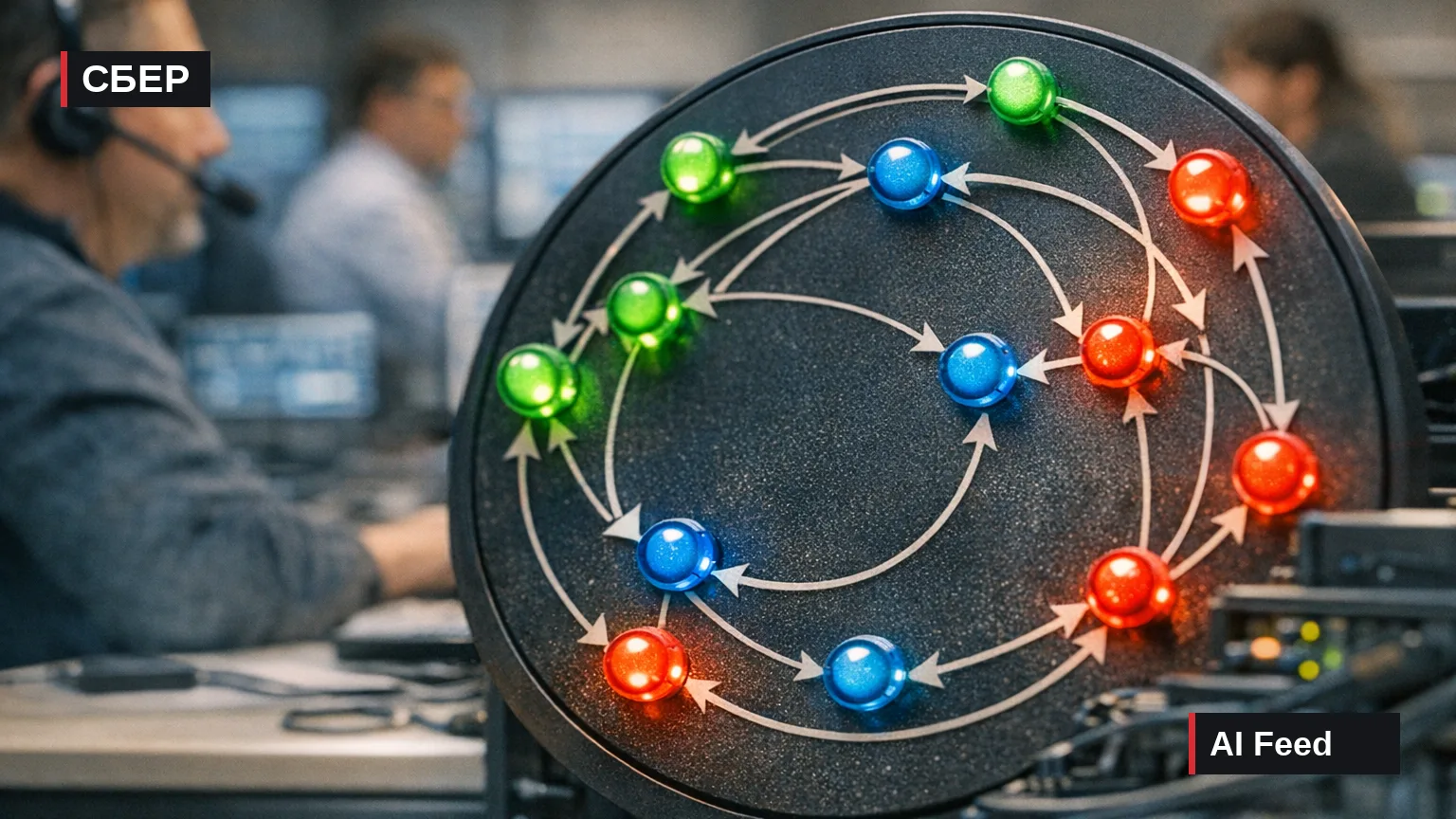
Sber has described HG SDLC, or Human Guided SDLC, an internal system for running and refining managed development processes on top of an ACP-compatible coding agent. Built by several teams for their own needs, the orchestrator connects specification work, coding, checks and engineering decisions in one traceable workflow.
The system addresses the manual handoffs that remain between agent-assisted development stages. Even when an agent can produce code, tests and a pull request, people may still have to reconstruct requirements, project constraints and earlier results for each new session. HG SDLC instead keeps process state, context, artifacts and transition history within the orchestrator.
Each process is represented as a versioned cyclic graph called a scenario. Stored as a YAML file, it defines the stages, permitted transitions, mandatory checks and loops for rework. When a task starts, HG SDLC preserves a snapshot of that graph and records the run’s steps, attempts, artifacts and human decisions.
Scenarios combine several node types. AI Nodes invoke an agent with specified instructions, context, skills and subagents, while Command Nodes run builds, tests, linters, scanners or other shell commands. Human Input Gates obtain information or choices, Human Approval Gates present accumulated results for acceptance or rework, and Terminal nodes close the route with a defined outcome.
In Sber’s illustrative interface-change workflow, the agent studies the requirements and codebase, prepares a specification and, after approval, updates the code and tests. Command nodes then run configured checks before an engineer reviews the changes, artifacts and results. Accepted work can be published to a working branch or submitted as a pull request.
For corrections, Rework can return execution to a selected step with instructions explaining what the agent should change. The workflow may continue over the existing modifications or restore the workspace to a checkpoint created before that step, allowing targeted iteration without discarding the process history.
Sber does not present HG SDLC as a finished enterprise platform covering the entire product-development lifecycle. It also says current language models cannot support one scenario that works equally well for every task. The more realistic target is a validated route for a particular class of work, incorporating organizational policies, context handling, CI/CD, required checks and publication rules. Longer connected workflows alone do not establish higher quality or faster delivery; those outcomes require separate evaluation.
| Node | Purpose |
|---|---|
| AI Node | Runs a coding agent with instructions, context, skills and subagents. |
| Command Node | Executes builds, tests, linters, scanners and other shell commands. |
| Human Input Gate | Requests information or a choice from a person so the process can continue. |
| Human Approval Gate | Presents accumulated results to a person for acceptance or return for rework. |
| Terminal | Ends the route with a specified outcome. |
HG SDLC status and scope
Several Sber teams developed the system for their own tasks to test a managed model of agent-assisted development. The publication does not describe it as a finished platform covering the full product-development lifecycle and does not announce public availability.
Sources
Event date: 2026-10-01. Primary source date: 2026-10-01.