

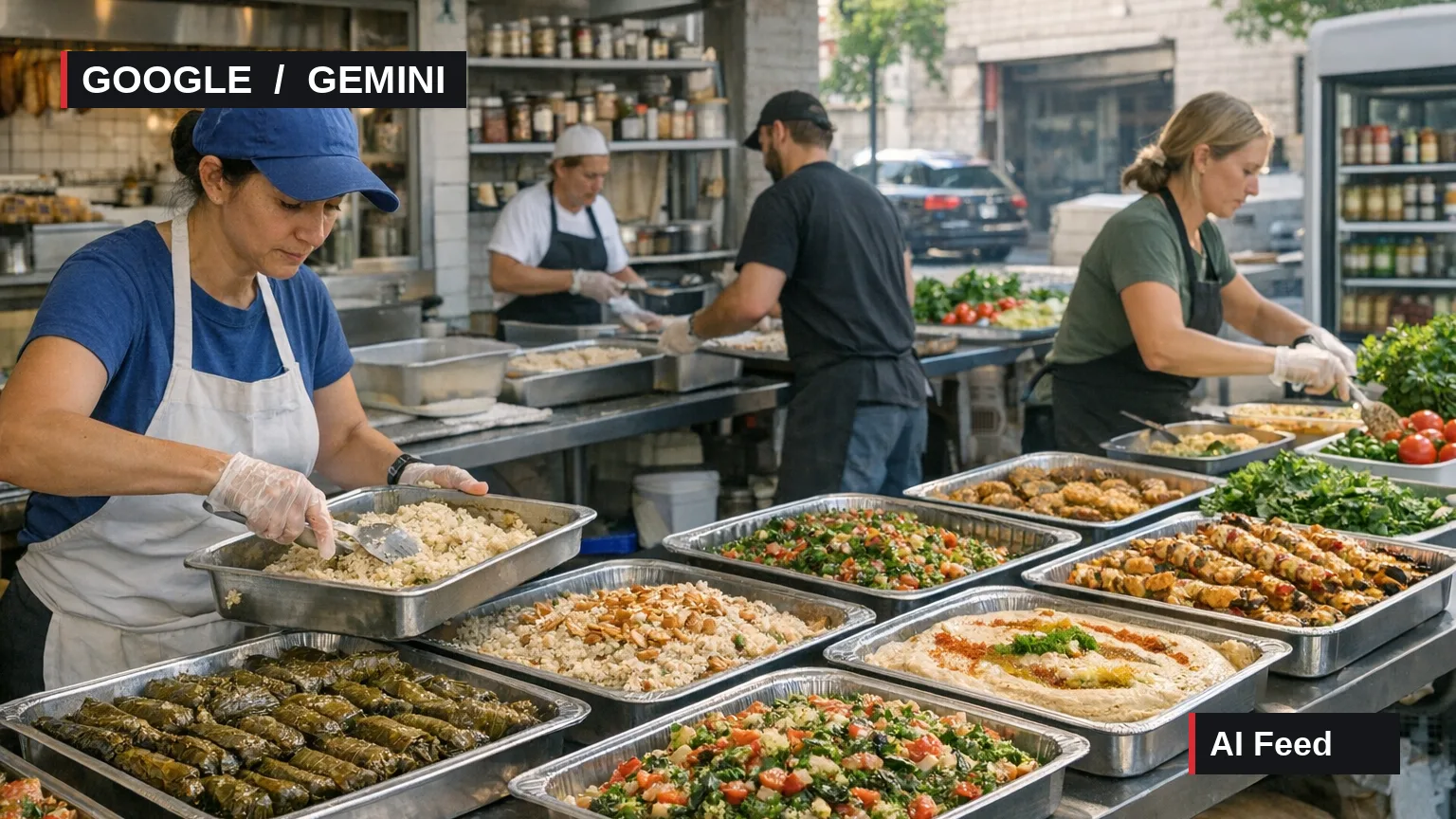
Edy’s Grocer owner Edy Massih uses Gemini to scale family recipes for catering, consolidate grocery orders and adjust menus for dietary restrictions, according to a Google case study published September 28. The Brooklyn business combines a deli counter with catering, pop-ups and community events; Google frames the tool as a way to reduce the planning and administrative work involved in serving large groups.
Recipe scaling is the first use case. Massih says multiplying every ingredient by the same factor can ruin a dish, particularly when delicate spices or pastry ratios are involved. Instead, he gives Gemini a family recipe and asks it to convert the quantities for a larger catering batch. Google’s sample prompt scales chicken shawarma wraps from eight servings to 50, adjusts the spices and groups the required ingredients by grocery aisle.
Gemini also supports purchasing and preparation. Google says Massih uses it to combine ingredients across an event menu, total repeated items, organize shopping lists aisle by aisle and structure preparation schedules several days ahead. Massih says the resulting breakdowns help him keep food waste and costs to a minimum, but the post provides no measured reduction in spending, waste or working time.
The third use case is adapting dishes for dietary requirements. Google’s example asks Gemini to make pistachio baklava and salted tahini brownies suitable for guests who are strictly gluten-free and nut-free while preserving texture and flavor. Massih says the model handles the additional calculations and logistics. The post does not describe an allergen-verification process or other safety checks for the suggested substitutions.
Practical context: The workflow links several related planning tasks: serving counts determine recipe quantities, those quantities feed a consolidated order, and dietary constraints trigger further substitutions and recalculation. In practice, that makes the output most useful as a connected planning draft rather than isolated answers. Measurements, ratios and substitutions still warrant human review because mistakes could affect cost, dish quality and guest safety.
This is a customer case study, not a new Gemini release or a controlled assessment of performance. Google does not identify the Gemini model version, subscription tier or any integration with inventory or accounting systems. It also supplies no benchmark for accuracy or time saved. The article therefore documents Massih’s reported workflow without establishing that other restaurants or caterers would achieve comparable results.
Sources
Event date: 2026-09-28. Primary source date: 2026-09-28.