
Google introduced Gemini 3.8 Live with Live Avatar on September 24, adding a streaming visual persona to its live conversational model. The feature is available in Gemini Enterprise, and Google also provides API documentation for developers. It extends Gemini 3.8 Live, which the company launched the previous week, rather than representing a new base model version.
According to Google, Live Avatar processes visual and audio inputs simultaneously, then responds with expressive audio and near-real-time video. The company describes precise lip synchronization, natural facial expressions and fluid turn-taking. Suggested enterprise uses include customer service and interactive walkthroughs, although the announcement provides no performance results for those scenarios.
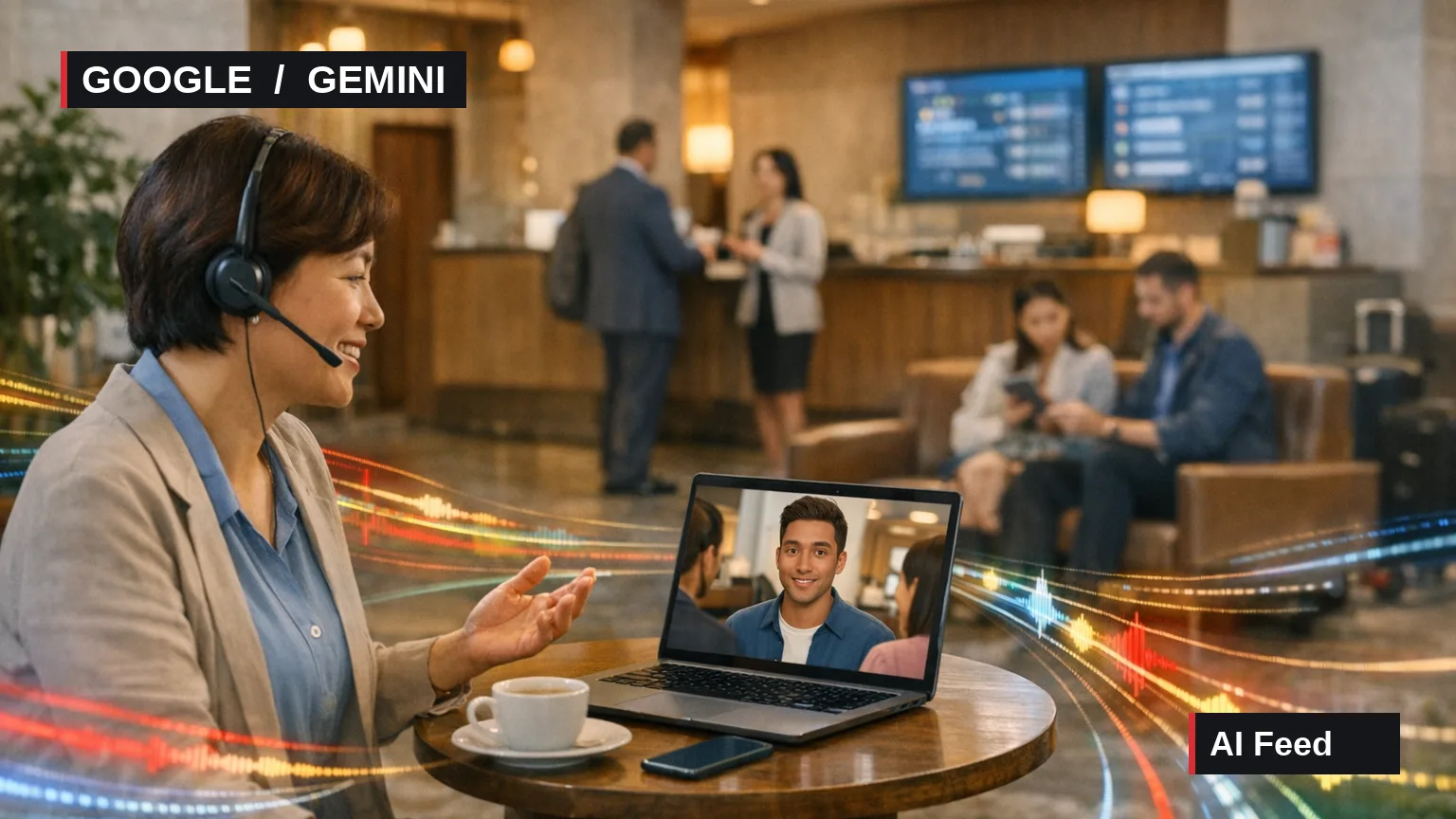
The system can initiate tool calls and retrieve data asynchronously without stopping an active conversation. Google illustrates this with a hotel check-in scenario in which background operations continue while the avatar speaks with a guest. The announcement does not quantify latency or identify which enterprise tools are compatible.
Live Avatar can switch among 97 languages during a conversation. Google says its speech-to-speech synchronization dynamically adjusts lip movements and expressions when the language changes, without reducing video fidelity or introducing visual drift. The announcement does not present independent test results for these claims.
Organizations can select preset characters with different appearances, voices and expressive styles. Developers can also generate an animated avatar from a high-quality reference image, with Google claiming the result preserves the reference likeness, brand styling or character identity. Custom avatar creation is currently restricted to enterprises admitted through an allowlist.
Practical context: In practical terms, the addition turns Gemini 3.8 Live from a primarily voice-led foundation into a component for visible virtual brand representatives. Two boundaries matter for adoption: access is centered on Gemini Enterprise, and custom character creation requires separate approval. Google’s announcement gives no pricing, infrastructure requirements or measured latency, so the source does not support cost or speed comparisons with other streaming-avatar systems.
Google says all audio and video generated by Live Avatar receives an imperceptible SynthID watermark embedded directly in the output. The company presents this measure as a way to keep AI-generated material detectable and reduce misinformation or misattribution.
| Component | What Google claims | Condition or limitation |
|---|---|---|
| Conversation | Near-real-time streaming audio and video responses | No quantitative latency figure is provided |
| Languages | Switching among 97 languages with adapted expressions and lip synchronization | No independent test results are presented |
| Tools | Asynchronous tool calls without interrupting the conversation | Compatible tools are not listed |
| Avatars | Preset characters and avatar generation from a reference image | Custom avatars are limited to allowlisted enterprises |
| Labeling | SynthID embedded in generated audio and video | Intended to help detect AI-generated content |
Sources
Event date: 2026-09-24. Primary source date: 2026-09-24.